

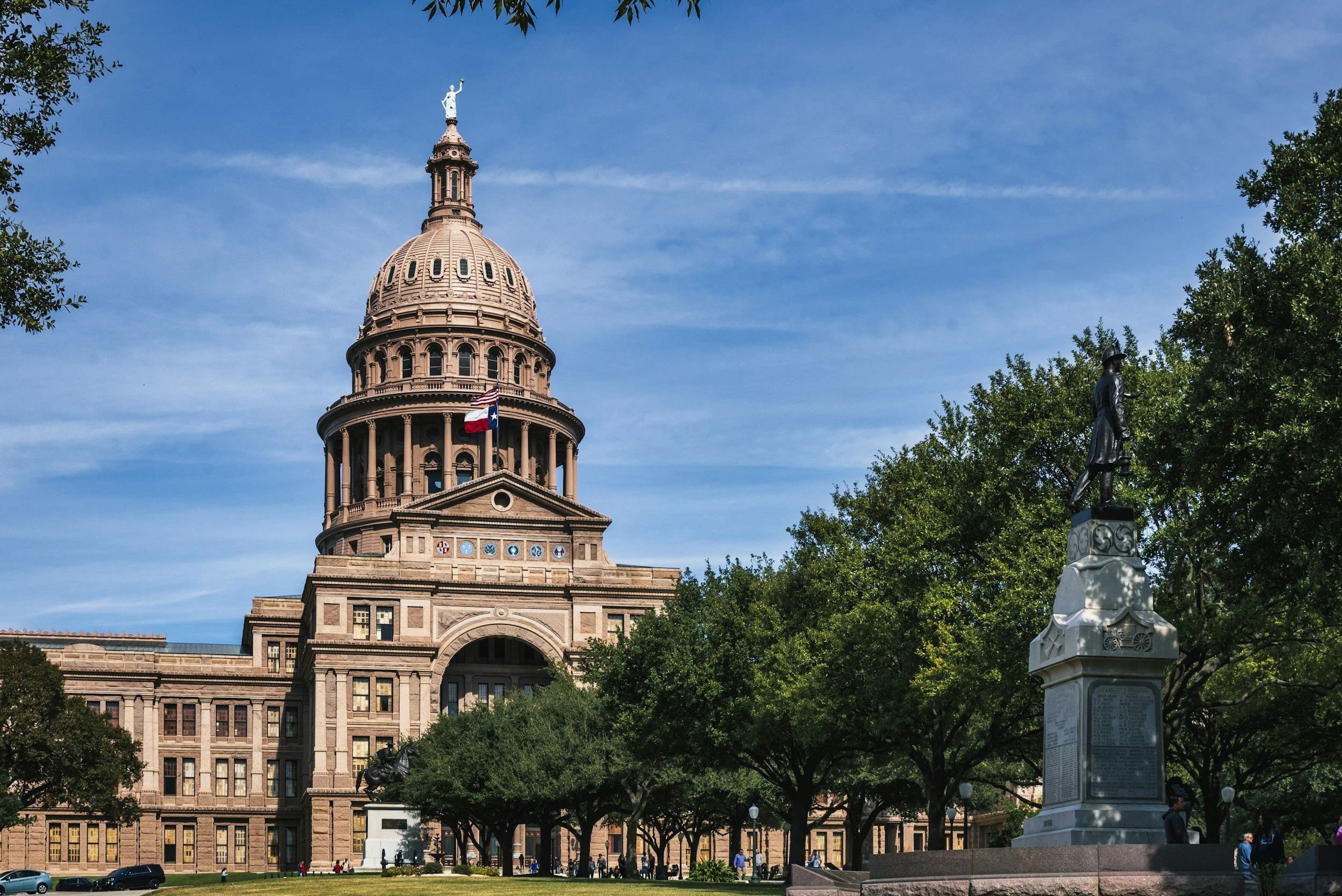
The Texas State Capitol in Austin. Photo by Trac Vu on Unsplash.
Voters went to the polls on November 3, and the results changed a lot in both Austin and Washington. About 9.8 million Texans cast ballots, according to the Texas Association of Community Colleges. I've spent the past week reading what TACC, CCATT, ACCT and our other associations are saying about what comes next for community colleges. Here's what I'm watching.
In Washington, Democrats won control of both the House and the Senate. With a Republican president, that means divided government for the last two years of President Trump's term. ACCT expects new leaders on the committees that write the education budget, including Sen. Patty Murray as chair of Senate Appropriations and, likely, Rep. Rosa DeLauro on the House side. Those committees fund Pell Grants, TRIO and the other federal programs our students use.
The timing matters, too. Federal funding runs out December 11, and final spending decisions could slip to February or March. Late budgets make it harder for colleges to finalize Pell awards and financial aid packages for students.
ACCT also expects the new Congress to dig into issues we've been following all year, like the future of the Department of Education, federal loan limits and the new accreditation rule. And ACCT has already counted at least five incoming members of Congress with community college ties, including Rep.-elect Johnny Garcia of Texas, who attended St. Philip's College in San Antonio.
The changes in Texas were even bigger. Democrats won every statewide race, including governor, lieutenant governor, attorney general and comptroller. They also won control of the Texas House for the first time since the 2002 election, while Republicans kept their majority in the Senate. TACC notes it's the first time in more than two decades that the two chambers will be led by different parties.
A few of those changes matter for community colleges right away. The new governor will appoint members of the Texas Higher Education Coordinating Board. The new comptroller will prepare the revenue estimate that sets the starting point for the state budget, including our funding under House Bill 8. And a new House majority means a new speaker and new committee chairs. The session starts January 12.
Here at MCC, these decisions show up in real dollars. In 2023-24, 2,731 MCC students received Pell Grants totaling $16.7 million. Federal grant programs like TRIO and Title V are on MCC's list of federal priorities. And because state funding now follows student outcomes under HB 8, whoever writes the next state budget shapes what we can offer students in Central Texas.
Community colleges have done well in Austin because both parties see what we do for students and employers. TACC put it simply: community colleges have "long earned bipartisan support." I want to keep it that way, and that's why this winter's trips to Austin and Washington matter so much.
Community College Day at the Capitol is January 28, about two weeks after the session starts. Texas will have a new governor and new statewide leaders, and TACC projects that 21 Texas House seats changed parties. A lot of the people writing the next state budget won't know MCC yet. Community College Day is our chance to introduce ourselves before the big decisions get made.
In February, community college leaders from across the country head to Washington for ACCT's National Legislative Summit. More than 100 new members of Congress will be sworn in on January 3, the committees that fund Pell and TRIO will have new chairs, and final spending bills may still be in play when we get to Washington. Sitting down with our congressional delegation, with real numbers from MCC in hand, is the best way I know to make sure they hear from Central Texas early. I'll be there for both trips.
ACCT and its partners have called a National Week of Action, November 9 through 13, on the Education Department's proposed changes to its grant rules, known as EDGAR. According to ACCT, the changes would let the Secretary of Education end federal grants "for convenience" and change how multiyear awards are funded. That would make grant decisions more political and less about merit. ACCT and AACC filed comments opposing the changes in September, and ACE and 39 other associations asked the Department to withdraw them. The new Congress could also try to block the EDGAR rules through spending bills, which makes this a good time for community college leaders to speak up.
That's where trustees come in. MCC's board has seven elected members, and our races are nonpartisan. We don't run under a party label, and we answer to many of the same voters as the officials we meet with, Republican or Democrat. That lets us sit down with lawmakers from both parties and talk about students, jobs and budgets without the conversation turning into a partisan fight. College presidents and staff bring deep expertise to these meetings. Trustees bring the voice of the community that elected us, and we can take it to whoever holds the seat. In my experience, that's the real value of trustee advocacy, and it matters more than ever this year.
I'm looking forward to working with new and returning leaders in Austin and Washington. As always, there is much to do and we will work to be prepared for what's next!
